
2025 YEAR END
As the year wraps up, it’s a good time to check in on how the Jackson Hole real estate market is doing. While national housing trends tend to grab headlines, Jackson Hole often plays by its own rules. The area’s uniqueness and its extreme land scarcity create a dynamic market that can be difficult to compare to anywhere else.
Market Overview
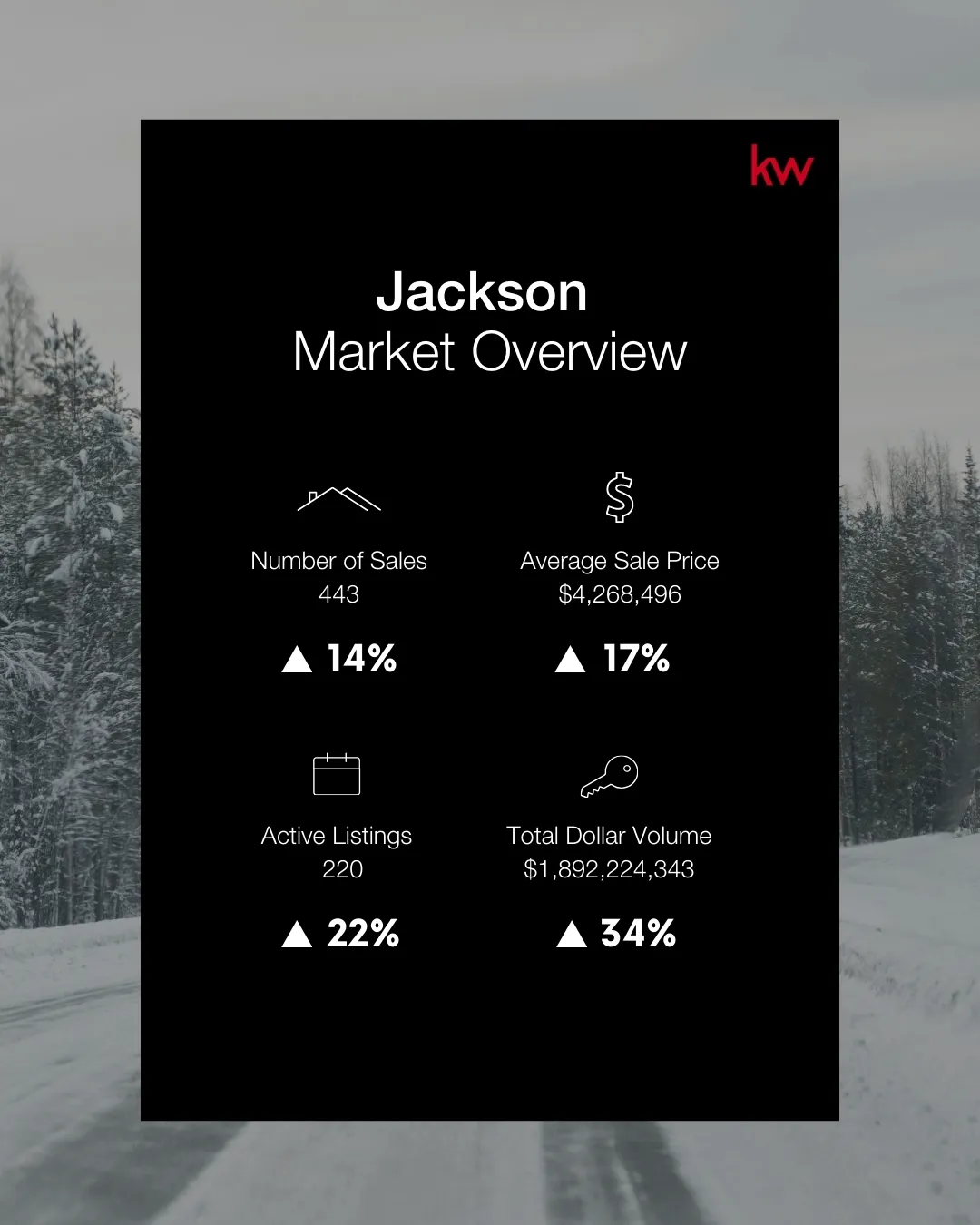
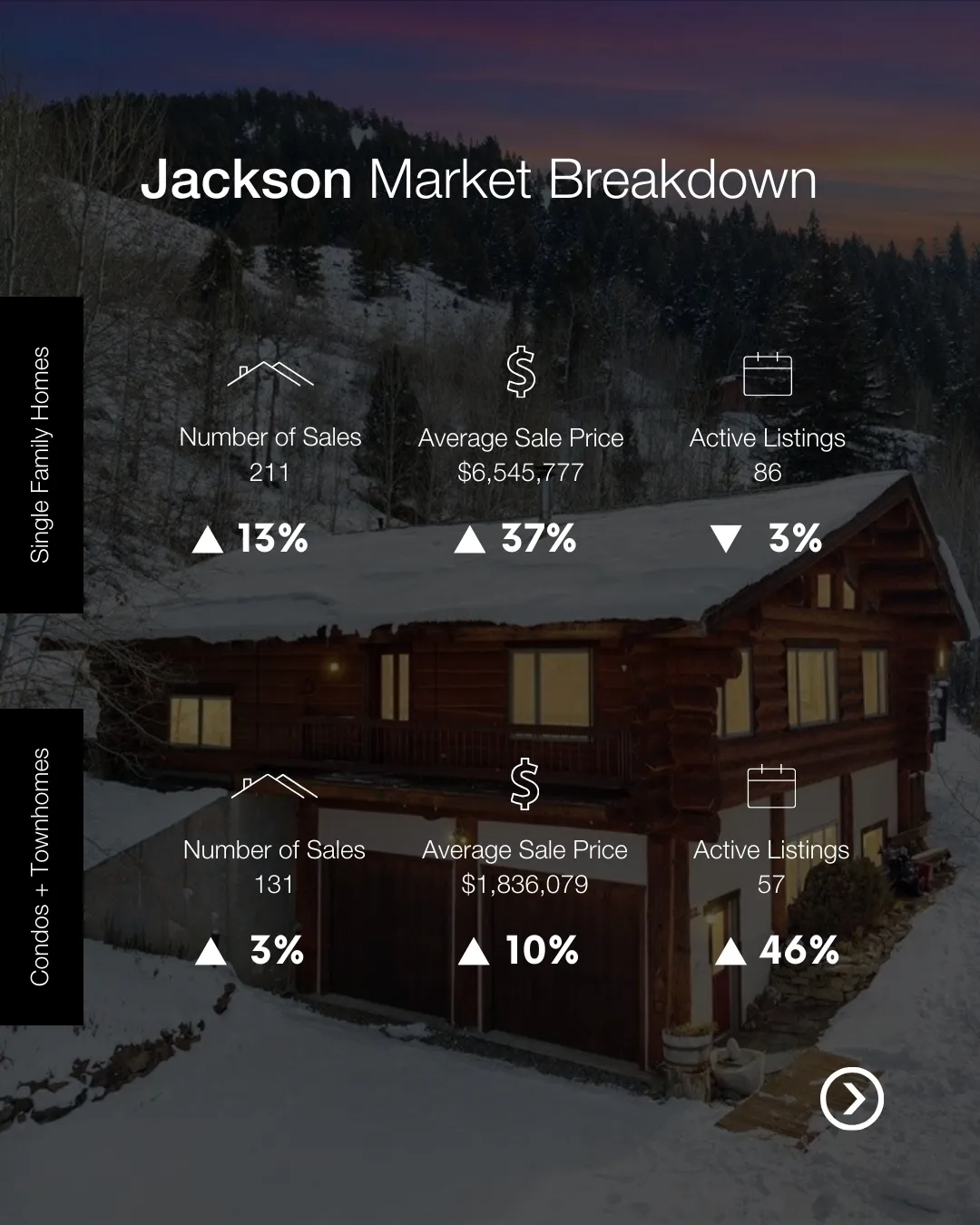
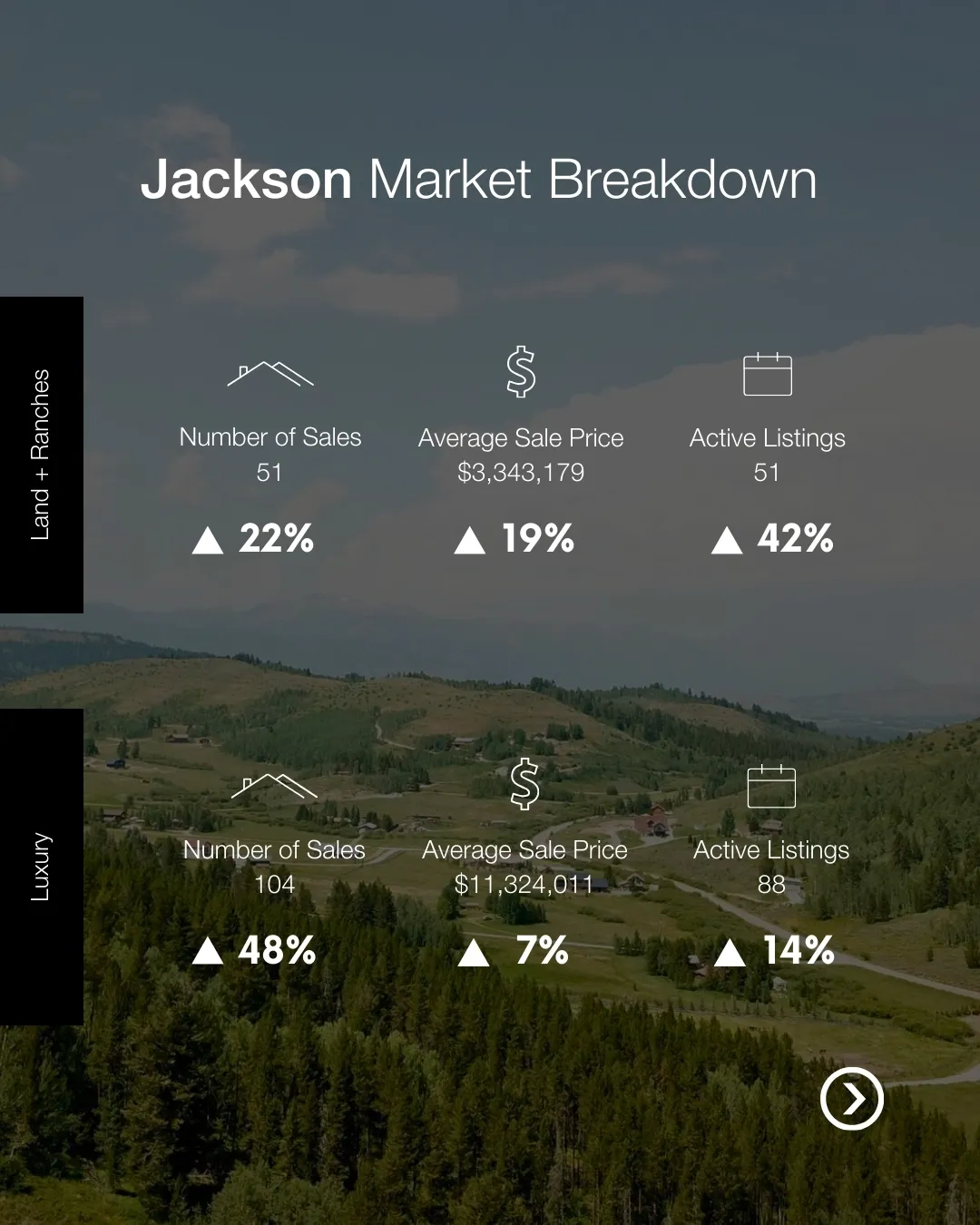
Overall, Jackson’s real estate market showed its power in 2025, with several key metrics climbing back to levels not seen since 2021 and 2022, during the height of the COVID-era market surge. Total property transactions rose 14% year over year to approximately 443 sales, marking the highest annual total since 2021 (though that year remains an outlier with 853 transactions). Median sale prices have hovered near the $2 million mark for the past three years, underscoring continued price stability.
Inventory increased roughly 22% compared to last year’s year-end, with 220 active listings, still historically low and likely reflective of a new normal given limited opportunities to add supply. Momentum is already building for 2026, with properties currently under contract up 9% compared to this time last year. Buyers and sellers considering a move in the coming year should pay close attention to these conditions: well-positioned properties are selling.
2025 YEAR END
STAR VALLEY REAL ESTATE MARKET REPORT
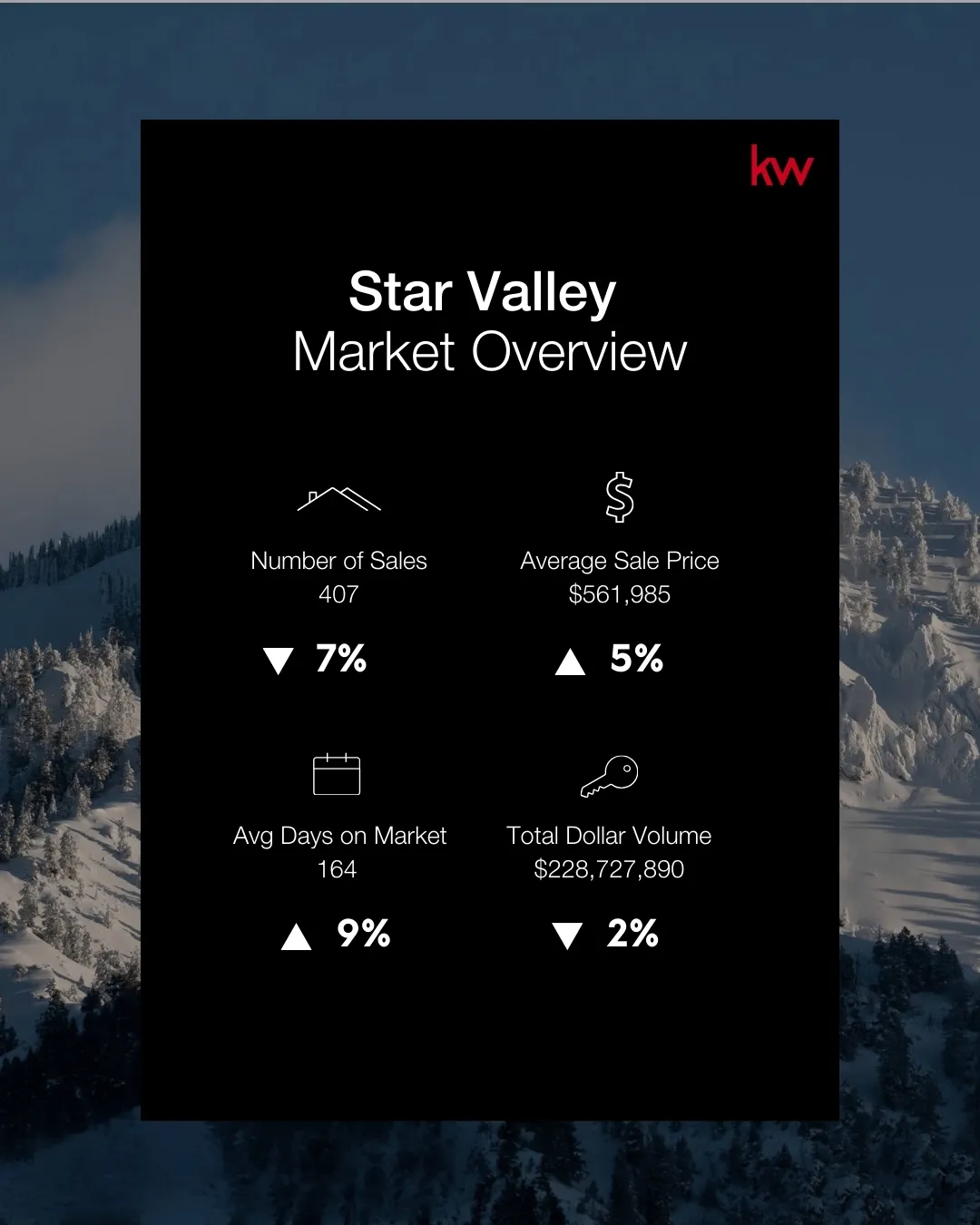


Year over year, overall transaction activity softened, with total sales declining 7% (from 437 to 407 closings). While fewer properties changed hands, pricing metrics tell a different story — values continued to strengthen. The average sale price rose 5% to $561,985, and the median price increased 4%, signaling sustained upward price pressure and continued buyer willingness to pay for quality inventory.
Despite the drop in unit sales, total dollar volume only slipped 2% to $228,727,890. This relatively modest decline, compared to the reduction in sales count, underscores the resilience of property values and suggests the market is adjusting in pace rather than in price.
Inventory levels expanded meaningfully. Active listings increased 20%, providing buyers with more options and reducing the intensity seen in previous low-inventory cycles. Pending sales climbed 33%, a notable indicator that demand remains active and engaged, even if transactions are taking longer to close.
Average days on market rose 9% to 164 days, reflecting a more normalized absorption pace. Homes are still selling, but buyers are exercising greater selectivity, and properly priced, well-presented properties are outperforming.
The significant shifts in the highest and lowest recorded sale prices appear to be influenced by outlier transactions in 2024 rather than representing a broad change in market fundamentals. When those extremes are normalized, the core market trend remains steady: fewer sales, stable-to-rising values, expanding inventory, and a gradual shift toward a more balanced environment.
Overall, the data suggests a market transitioning from rapid acceleration to sustainable growth — with pricing stability supported by consistent underlying demand.